Showing posts with label New Monsters. Show all posts

Friday, December 6, 2024

The Reynardine

Reynardines are foxes cursed to go about the world in the manner of men, or perhaps men that are cursed to go about the world in the manner of foxes. They are knaves and rascals, arch in their cunning, and some have used this to achieve even the semblance of nobility among the peoples of the World, despite their disadvantages. Most, however, make a living the way most who smile easily and stab even easier do - as con-men and bandits. They are of a kin with the Old Gods, who protect them from such woes as the children of Law may heap upon them.

In human form they look identical to a human, though they are universally handsome. It is said among some old women that they can be identified by the color of their hair - red, brown, black, silver, or shock white depending on the area and season. This is likely not so, but even if it were it would be difficult to identify them as such as all these colors are found among those mortals who grow hair in the natural way. In the form of a fox they appear... well, as a fox, of course! Sometimes they walk on their hind legs and  wear clothes, sometimes tailored for their small size but usually not, and can somehow carry such objects as they would carry as a man, again adjusting for size.

While they are found all over the World, they are most common in the isles of Cuccagna, Karse, and Noppin. Why they seem to cluster at archipelagos is a mystery to all.

Reynardine
AC 6 [13], HD 3+1* (14hp), Attack 1 x bite (1d4) or by weapon, THAC0 16 [+3], MV 150' (50'), ST D10 W11 P12 B13 S14 (4), ML 8, AL Neutral, XP 50, BA 1 (1d4), TT C

  • Shapechange: May take the form either of a man or a fox during the day. Must be a fox at night.
  • Mundane Damage Immunity: Will only be killed by silver weapons or, but will be incapacitated by non-magical weapons.
  • Languages: May speak common, fairy, and the language of trolls regardless of form.
  • Armor: Eschew for it inhibits shapechanging.
  • Scent: Animals such as horses, dogs, cats, and chickens recognize a reynardine.
  • Charm Person: May charm person at will (-2 save) but only once per intended victim within 24 hours.
  • Surprise: In animal form surprises on 3 in 6.

Friday, September 30, 2022

Wandering Monster Table

A joke 13 years in the making.

Ornate tables carved with fanciful design and given unnatural life through arcane arts, typically with lions claws for table feet and a set of fangs on a side drawer.

AC 14 (6), HD 4, Attk 2 x claw (1d4), 1 x bite (1d6) THAC0 15 [+4], Move 120' (40'), SV D10 W11 P12 B13 S14 (4), AL Neutral, XP 35, NA 1 (0), TT O, Q

  • Immunity: Unaffected by sleep spells.
  • Magical Origins: Created by powerful wizards.
  • Wanderers: Have no lair. Keep treasure in drawers in own body.

Friday, August 12, 2022

Scitalis


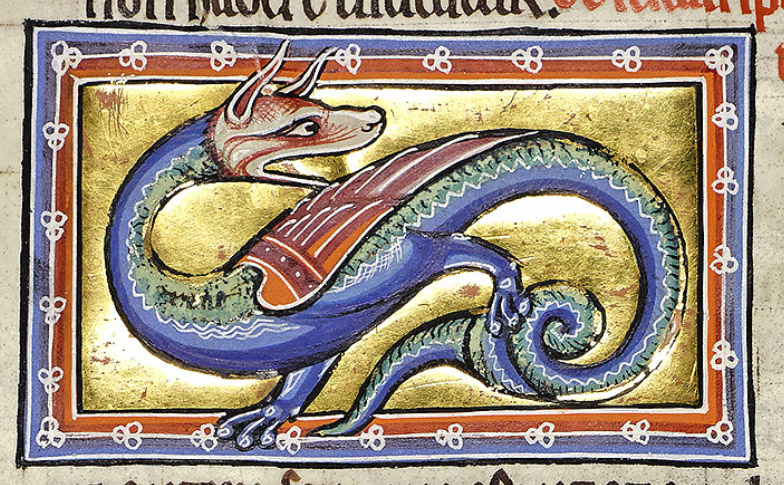
A scitalis is a strange form of serpent found only on Cuccagna and its outlying islands. Whether it is the creation of some mad wizard - perhaps Prospero himself - or a relatively natural creature of the World of Nightwick is unknown to scholars. Some scant few believe that it is the descendent of normal serpents who have been warped for centuries by the weird magics of Cuccagna, though most agree that the magicians who inhabit the island have not done so for so long.

It appears as a serpent with a pair of vestigial wings and two stunted limbs, neither of which aid it in locomotion. Its head is rather like that of a normal serpent, but it sports two protrusions that look rather like the clipped ears of a fighting dog. In life its scales are pulsing and scintillating, forever creating new patterns across its opalescent hide. In death they maintain their iridescence but lose all sense of motion. 

Scholars of Cuccagna say that the mesmeric effect of the scales is created by a combination of their strange alchemical makeup and the creature's extreme body heat. The source of this heat, whether organ or stone swallowed in youth, has yet to be found.

AC 15 (4), HD 3, Attk 1 Bite (1d4 + Constrict), THAC0 16 [+3], MV 90' (30'), SV D10 W11 P12 B13 S14 (3) AL Neutral XP 30 NA 1 (1d6), TT U

  • Brilliance: Anyone looking at the scitalis must save vs spells or become hypnotized until they can no longer see the scitalis (including if it dies) or until the victim is constricted. Victims stand still, simply gazing at the scitalis. 
  • Averting Eyes: -4 penalty to hit. The scitalis gets a +2 bonus to attack.
  • Constrict: 2d6 Automatic damage each successive round after a successful bite attack.
  • Body Heat: If either damage die for Constrict rolls a 6, the victim must make a save vs breath or lose all flammable items.

Wednesday, March 11, 2020

The Anthrophage

Yes, I know it should more properly be Anthropophage, but when I hear that I think of an ogre or something. Anyway, here's a monster for Uz.


The anthrophage is a strange creature found near certain alien wrecks in the Wastes of Rust.  While comparatively easy to destroy, their ability to reproduce by infecting victims means they are widely feared by the inhabitants of Uz - or at least those who travel into the wastes. They appear as a large dodecahedron atop a shining screw with spindly legs.  Despite their glittering appearance, all of their body parts are organic.

Anthrophage
AC 7 [12], HD 1, Attk 1x (drill special) THAC0 18 [+1] MV 90’ (30’) SV D10 W11 P12 B 13 S14 (4), AL Neutral, XP 13 NA 1d4 (2d6) TT Nil
  • Virus: The drill of an anthrophage injects the victim with a strange substance. They must make a save vs death or explode into a number of anthrophage equal to their HD in 1d3 rounds.
  • Derived: Anthrophage will not and cannot attack nonhuman entities.  Priests, regardless of mutation level, count as human for the purposes of this attack.
  • Short Lifespan: Anthrophagi can only live for 1d6 weeks.

Tuesday, March 10, 2020

The Devil You Know


Familiars in the World of Nightwick are bestowed once a pact has been made with a demon. They evil spirits that possess the bodies of animals.  The animal depends on the demon with whom the magician has a pact. The animal will appear normal under moon and starlight but grotesque and diseased under the light of the sun. Hybrid animals, such as awful rats, or goblin-shaped humanoids are sometimes used, though these make the magician's allegiance to the Pit much more obvious to witch hunters.

The animal must be provided by the magician. It must be named, anointed with holy water (as though a child), and cared for for one moon. On the night of the moon most associated with the pact-giving demon, the magician must slay the animal.  Thereafter, they must light incense and burn 1hp worth of blood and then provide a bowl filled with half their hp in blood. The burned blood, which attracts the spirit, can be from any creature but the bowl must be from the magician.

Soon the body will begin to stir and will then move to drink the blood from the bowl. Thereafter it will be bound to the magician, granting the following benefits:

  • A power dependent on the pact-giving demon (eg. a familiar from Crapoad will reveal the location of a text the magician desires , once per day).
  • Each time the magician levels they gain an additional spell, taught to them by the familiar spirit.
  • The familiar may be sent on errands, such as spying or gathering news. This takes 2d6 weeks, regardless of the destination, and reveals the most recent news or 1d6 rumors about the location in question.  This may also be done with items or persons.
  • While they can see the familiar, the magician may switch senses with their familiar spirit.  This may be maintained as long as the magician desires, but should the magician view where a creature goes when it is sent on an errand, they must make a saving throw against spells or be maddened forever, counting as a normal-human and no longer retaining the memory to cast spells. The spirit can move away from line of sight with the caster once these senses are switched, but if the effect is broken it cannot be reinitiated until the familiar returns.
  • If the familiar spirit is within line of sight of the magician, the magician has a +2 to saving throws.
  • The familiar may act as instructor in languages or other minor, non-weapon proficiencies, taking the same amount of time as a normal tutor but without the need to pay gold. 
However, having an evil spirit as a companion also imposes a number of problems:
  • Each day the magician must feed the familiar spirit 1hp worth of blood or it will become temporarily powerless.  Should it go without, the next time it feeds it shall drain 1hp per day that was missed, even if this kills the magician.  
  • A magician with a familiar may not be resurrected from the dead. In addition beneficial clerical magic only works on them 50% of the time, unless it is cast from a scroll or another item in which case it is always effective (except raise dead).
  • Should the familiar spirit be destroyed, the magician immediately loses 4 levels of experience. Should this cause them to be slain, they disappear in a cloud of greasy, black smoke.
A familiar spirit will never use its attack in defense of its master, only itself, but may cast spells on their behalf; however, they only do so rarely, since if the magician dies their soul is sent to the Pit and the familiar spirit's evil mission completed.

Regardless of the type of animal they resemble, all familiars have the following statistics.

FAMILIAR SPIRIT
AC 2 [17], HD 2+2, Attk 1 (1d8 + poison), THAC0 16 [+3] MV 180' (60') Flying, SV D8 W9 P10 B10 S12 (7), ML (special), AL Chaotic, XP 1,650 NA 1 (1) TT Nil
  • Mundane Damage Immunity: Familiar spirits may only be hit by weapons which are silvered or +1 or better.
  • Deadly Poison: The bite of a familiar spirit, regardless of the form it takes, causes a saving throw verses poison or die.
  • Spell casting: At will the familiar spirit may cast detect good, invisibility, and detect magic. Once per week they may commune with the beings of the Pit.
  • Weakness to Daylight: A familiar spirit may neither fly nor benefit from its mundane damage immunity while the sun shines upon it.
  • Piggy-back: Once per month, the familiar may carry the magician or a person they designate upon its back.  It may then fly tirelessly for an entire night.


If you want an interesting form for your familiar, head over to my patreon and check out the most recent post to see the Awful Rats with stats for OSE and art by Chris Huth.

Edited to include some critiques from Gavin Norman, author of OSE.

Tuesday, December 24, 2019

A Monster to Eat Children: the Rawhead


Rawheads are a hideous form of undead created when a particularly vile wizard or warlock dies before their familiar. If the body of the caster is left too near the familiar, they will fuse together in death, creating a strange hybrid with the bones of the caster topped with a rotten and bloody version of his familiar's head.  For some reason unknown to all this process also enlarges the creature, making it 10-15' in height.

They sustain their putrid unlives with the flesh of liars - preferring children to all other prey. Their ability to sense liars and mimic their loved ones means they typically act as ambush hunters, and their invisibility allows them to hide in a wide variety of environments.  However, they rarely go further than 6 miles from where they had their lair in life.


Friday, December 6, 2019

The Iron Squire

A Fisher of Hell constructs an Iron Squire

Iron Squires are a form of undead created for Armadeus by one of his mortal servants. Some say that it was the Baroness of Averoigne, who is well known for having created many other forms of undead. Still others say these creatures predate her, as they are not found in her demesne, and while there is evidence of the Sword Brothers conduct rituals for their creation they seem unconnected to her presence. Some even rumor that their creation was first done in ruined Acheron before that terrible city was destroyed. Whoever the mortal creator was, they were certainly inspired by Duke Valax, the Master of Things Hidden and one of Armadeus's chief lieutenants.

The creation of an Iron Squire requires a man who has never known or renounced the Law - including satanists, heretics, and pagans - to be sealed completely in a suit of iron filled with spikes, blades such that his flesh is slowly destroyed and his blood drained. The victim may be willing or unwilling, and some maddened human servants of Armadeus have committed themselves to undergo the ritual. At the end of the ritual, all that remains is a skeleton sloshing around in its own blood and viscera inside an iron suit of armor it cannot remove. They are animated solely by the will of Armadeus, his lieutenants, or the peerage of Hell that serves fealty to him. The victim's will is utterly destroyed.

Iron Squires are often in the service of Knights of Hell. Perhaps this is the origin of their name. In combat they wield longswords with deadly accuracy and also may spit up their own steaming viscera, heated to boiling by the fires of the Pit.


Monday, April 1, 2019

Ghul, Frogling

Kinda...

In some world that is not this one nor any I have discussed on this blog (probably), there are strange creatures that are like froglings but also like the ghouls of Nehwon. These little bastards sneak around, enjoying their see-through-y-ness to kill people for no reason.  Jerks!

They are cannibals, but that means they only eat other Froglings so its probably fine. 

They typically wear only a loincloth so that everyone can marvel at how gross their only partially visible insides are. Weird sages think that how grossed out people gets gives them a boner, but those sages are wrong about how frogling reproduction works.


Wednesday, March 20, 2019

Two Horrors from Nightwick Abbey

These two undead are commonly believed to be creations of the Baroness.


Broken dead  are the victims of the Baroness's torture on breaking wheels. Forever locked in their devices of death, they are enchanted to roll around and use their breaking wheels to attack intruders into the abbey. Sources from the siege of the abbey speak of the horrific absurdity of their rolling by and crushing men to death; all the while their skulls open wide in a wordless scream of ecstasy and pain.


Caged ones are a bit of a misnomer, as their hideous bodies are an amalgam of victims forced into a gibbet whose bodies fused together in the process of decomposing - whether by natural or unnatural means is unknown. It is likely that these poor victims waited in their camped cages awaiting the tortures of the Baroness and her cronies, not realizing that their confinement was, itself, the torture.


Tuesday, March 12, 2019

The Baroness

I used to make these sorts of posts a great deal more, but I stopped because I didn't wish to provide spoilers for my online group - who reads this blog regularly. Since this villain is now gone, I can discuss her in some detail.


During the last generation to know the Sword Brothers before the siege of Nightwick Abbey, the Baroness came to the Dark Country from the county of Averois in the Realm. Her name is lost to, or perhaps deliberately hidden from, time. In the chronicles of the Sword Brothers she is referred to only as the Baroness, and those few sources from that era written by others that still survive she is called the Witch of Averois. She was the sole heir to a barony in the forest choked province of her birth. During her youth she proved to be a difficult child and one with a gift for manipulating others.  As she grew older her manipulative nature combined with her burgeoning womanhood into disturbing turpitiudes. Some legends tell of dalliances with both men and demons, but surely this could not have happened before she came to the abbey.

Her father sent her to the Dark Country to stay in Nightwick Abbey so that she would learn holiness at the feet of the Sword Brothers. In hindsight this move was extremely counterproductive, but one must remember that at that time the truth of the Sword Brothers was not yet known - their depredations of the countryside considered evidence of their unflappable devotion to the law instead of the influence of the Pit. It is said that he sent her there out of fear for her mortal soul, but there are dark whispers that even then Nightwick's taint was such that it could call out to the evil of heart.  Perhaps it called her and she forced her father to allow her to leave.  

From almost the very beginning her acts were blasphemous, and many think that it was her presence that first revealed the true evils in the abbey. She dressed herself as the Lady and demanded to be addressed as such. She would further modify the Lady's traditional garment to expose aspects of her womanly figure in deliberate mockery of the Lady's chastity. A segment of the Sword Brothers indulged her in this lustful play acting, often in public for all to see. She would select pagan captives to be brought back to the abbey, and many at the time thought these victims were to provide her with sexual favors.  However, when some escaped the horrors of the dungeons beneath they recounted how she delighted in the torture of her chosen victims and also had her devoted Sword Brothers visit pain upon her, forcing them to drink her blood as she drank the blood of her victims.

Some say it was she who first invited magicians to the abbey to begin construction of the Sunless Garden and the twisted army they failed to perfect in time for the siege. It is certainly true that she aided their efforts with her perverse knowledge of human anatomy - gained over her years of torturing captives - and that many of the forms of undead created within the abbey are her handiwork.  Notably those referred to as the Caged Ones and the Broken Dead were likely created from her necromantic experiments.

When the forces of the West finally stormed the abbey, some sources say, the Sword Brothers had been split into two factions. The most powerful and largest worshiped a demon that, in the year 1393, was determined to be none of than Armadeus, the Emperor of Lies. However, a smaller cult dedicated to "the Lady" (that is, the Witch of Averois), had splintered off and refused to acknowledge any power higher than her. When the men of the West came to the torture chambers under the abbey, they found these two cults were already slaying each other - despite the fact that the abbey was under siege from outside forces! The slaying of her mortal form is not recorded, though it clearly must have transpired given the events that followed.

In the years after the fall, rumors circulated of robed figures entering the ruins to pay homage to "the Lady." Those about the village of Nightwick believe she was fed on the blood of dogs, pigs, and other animals taken to the abbey in order to give her unnatural life. The Howling Kommandos first found evidence of her existence on the first level of the dungeon, where depictions of the Lady seemed to represent an oddly specific person rather than an icon of the church.  Kozel, a devotee of Saint Santa Claus, began to research this figure and discovered the title of the Witch of Averois. 

Soon after the Kommandos began encountering cultists who clad themselves in black robes covered in stylized blood drops. The worst of these were the berserkers, who added human skin leather to their uniform and, according to a cultist they interrogated, drank blood from "the Lady's" teats.  Eventually they made their way onto what they called "the Baroness" level, which seemed to be comprised mostly of her old torture chambers. After avoiding her for many sessions, the Kommandos were eventually able to build up a posse of enough men to dare to venture into her lair.  They slew her and even thought to cover her blood-drenched remains with holy water to keep her from rising again.  As of their last delve it seems to have been effective.  Her cult is dispersed and her evil is no more.

However, it is known that there are many "instances" of the abbey and that the realities within are particular to the men and women who seek to wrest fortune from its darkened halls.  Perhaps, in some other abbey, she still lives.


Thursday, June 30, 2016

Dogheads

This depiction of the "Apostle to the Dogheads" is... wrong

Dogheads were men once, and perhaps they still are.  In some barely remembered time before the creation of the Realm of Man, perhaps even before even the Empire, there was a shinning kingdom of men far from the Middle Sea.  Some say it lay south of the Desert Lands, but others say it was somewhere in the jungles of the Land of a Thousand Idols and some say it was in both and neither.  Wherever it was or wherever it wasn't it was ruled by a wise king.*

In some tomes it is claimed that it was this king who first heard the Law, but such a belief is the rankest of heresies.  More conservative theologians who still believe the City existed before the Empire merely state that he could sense the great thrumming but not hear it as the Lady Could.  This has kept them unburned... so far.  In any case, he built the City.  The City was the jewel of the world before the Realm came into being, and it is said to have sparkled for a thousand years - supposedly the unnatural length of the wise king's life.

It's people became decadent and, as people without the light of the Law are wont to do, began to worship strange beings they believed to be gods.  The wise king warned them of their folly, but they did not listen.  Some say the high priests of the nameless god of the dogheads ate the king alive, though some say he still lives.  At the very least, they bit him, and for this they gained the heads of canines - whether as a curse from the God of Law or as a divine boon from their nameless idol none can say.

The City fell into ruin without its king and its (now dog-headed) people were set to a life of wandering.  Somehow, in the time of the First Emperor and the Lady, they came to the Steppe which lies east of the Dark Country.  They burned the human settlements that lay on the Steppe's edge and devoured the people there in the name of their nameless god.  Then they came over the Nameless Mountains.**  The legions beat them back but did not follow them into the Steppe, and they have lived their ever since.

They are a plague on the Dark Country.  They come in great raiding parties down the rivers and through the passes and burn and eat the men they come across.  By the reckoning of the pagans and even most Realmish settlers in that benighted land, they are actually not beast-men.  They seem, in their way, to have a language, a culture, and even two sexes.  Aside from their cannibalism(?) they act not unlike the raiding pagans of old.

There are three known types.

Lesser Dogheads (N) AC 15 HD 2 Attacks Weapon Special None Move 12" The average doghead.  Rarely seen outside of the steppe.  Use spears, shields, and small compound bows to defend their tents.

Greater Dogheads (N) AC 16 HD 4+1 Attacks Weapon (+1d6 damage if melee) Special None Move 24" Taller than a man by half.  Scamper on too many legs in an unsettling fashion.  Fond of compound bows and scimitars.

Doghead Chieftans (N) AC 16 HD 5+4 Attacks Weapon (+1d6 if melee) Special See below Move 24"/24" (Fly)  As Greater Doghead but with two heads (often one male and one female) and two crowns.  Can fly, become invisible, and breathe fire (8d6 damage, save for half) at will.  They may charm person or monster and create a sphere of darkness once per day.  Some may be able to turn into human form but are loathe to do so.  They will retain their second head but will hide it with a cloak.

*Some blasphemous sources record his name as Prestor Ultron, but only in Zenopolis.  All such records have been burned on the orders of High Pontiff Burgos the Sullen shortly before his passing.

**Some hold that the Nameless Mountains are named after the Dogheads nameless god.  This assertion is ludicrous.

Wednesday, May 18, 2016

The Savages of Time


Savages of Time
AC 14
HD 3
Attacks Crude Weapons
Special Cosmic Entropy
Move 9
HDE 6/400

The Savages of Time are heralds of cosmic entropy found in only the oldest ruins on dying and dead worlds.  Their presence seems to erode these ruins such that by the end they are nothing more than foundations.  From Earth the nearest example of their handy work may be seen on Mars, though - due in part to the zigguratic-structure of time, some of the ruins of that planet remain untouched.

They appear as morlock-like creatures - stouter than a man and with imbecilic features.  They are not so much albinistic as colorless.  They have neither art nor legends nor songs.  Their material culture, such as it is, consists only of crude tools for practical purposes.  Even these are prone to break in the hands of non-savages.

Wounds dealt by a savage contain the chill of cosmic entropy.  As such, they may not be healed by non-magical means.  Weapons which strike them must make a saving throw or rust beyond usefulness.  Those made of precious metals do not rust but instead tarnish, reducing their value by half with each failed save.  After four such failed saves the atoms of the weapon scatter harmlessly in a process that is only understood by those who meditate on the impermanence of all things.

Even magic fails in their presence.  Magical weapons used against them must make a similar save (the weapons attack bonus acting as a bonus to the roll) or lose an effect with each strike.  Should all its magic be drained in this manner, the weapon may then be destroyed as described above.  Spells cast on the Savages of Time may never be memorized again and the spell slots used are no longer available to the caster.

Some scholars have speculated about the nature of their spontaneous generation and seeming lack of secondary sexual characteristics.  A mad few have postulated that the savages of time are emanations of a 5th dimensional being best, but still dimly, understood as a god or titan of entropy.  Should such a being exist its presence would only be detectable by use of dispel magic.  Even this would only reveal the parts of the  creature which intersect with the dimensions perceivable by man. In any event such a creature would appear as a shifting mass of colorless bubbles constantly ebbing and flowing, presumably about 30' in diameter.  It would possess the following statistics: AC 15 HD 16 Attacks Beam of Entropy (3d6 damage), Special Cosmic Entropy Move 3/120 (Fly).  Slaying the creature would remove the Savages of Time from existence and may even restore the ruins around them.

Friday, March 18, 2016

Hail, Horrors!: Knights of Hell


At the bottom of space there is a Dragon.  Its mouth gapes wide, fangs bared, gouts of flame spiraling up into the void.  It is written that the river Acheron, which once brought life to the people of the Desert Lands in the eons before the founding of the Empire, flows through the World and down the throat of the Dragon, pooling in the first of its thousandfold terrible stomachs.  It is in that boiling morass of mud and hate and fear and fire that the souls of the damned first enter the Pit.

This is the realm of the Fishers of Souls. Horrid and hideous, blind and lame, they are the lowly smiths of Hell’s great armies.  They wade through the searing muck to find larvae - the debased form that the souls assume upon first entering the nether-realms.  These they grasp with great hooks of bone and sorrow and drag to the strange “forges” of Hell - vats and other devices too alien to man for our kind to understand their use.  It is in these that demons are made, and thereby those who sought to gain the favor of the Lords of the World are set to suffer with them in chains in the belly of the Dragon.


Most of these souls a changed into lesser fiends - such as imps or familiars - or gather together into a host of fiends with the power to possess mortals.  There are certain souls, however, of special wickedness that they are elevated into the Pit's great hierarchy.*  The forges change them in ways which reflect their diabolic masters.  

These are the Knights of Hell.  Four types are described below.

All Knights of Hell have the following statistics: HD 4 AC 16 ST 14 Move 12 (24 if able to fly).

All Knights of Hell may only be wounded by silver or magic weapons since they are not of this plane.  Holy water is also sovereign against them.  

Should a single Knight of Hell possess a man that man will not become a cadaverite in the normal fashion.  Instead his body will warp to take on the aspects of the demon that possesses him. Eventually he will become a physical manifestation of the demon with double the normal Hit Dice.  However, this physical body also means that he can be wounded by normal weapons.

All Knights of Hell reform in the Pit if defeated on the material plane unless special lawful weapon are used.

If forced into a magic circle, all Knights of Hell will teach one second level spell (roll or pick based on the most appropriate for the nature of the demon).


Knights of Armadeus appear as great carrion birds of enormous size - nearly the size of a draft horse, or as a great shaggy beast of diabolic aspect.  In either form they have the power of flight.

They may dispel invisibility at will.  Once per day they can create 10' of darkness and locate any object relating to an arcane or secret matter within 4 hexes of their current location

If forced into a magic circle, their form will change to that of a spectral warrior with black skin, black teeth, and black eyes.  In this form they may locate objects, and speak the true names of lesser fiends for the creator of the circle.


Knights of the Horned One appear in the form of satyrs, rams, bucks, and he-goats.  Sometimes these have the heads of animals, other times the heads of men.  They are always horned.  In none of these forms may they fly.

Knights of the Horned One may cast a powerful charm against persons (-2 to save) or monsters (no modifier) at will.  Once per day they may hold person, teleport from one spot shaded by a tree to any other within the confines of a hexmap (Judges Guild or ACKS regional sized), and may locate any object pertaining to a carnal affair within 4 hexes of their current location.

If forced into a magic circle, they will change into an angelic form of the animal they most resemble - or, in the case of a satyr, a strangely diminished angel.  In this form they will charm an object of the magician's lust, carry him to a shaded grove, or locate an object associated with his heart's desire.

Knights of the Horned One often engage in carnal acts with witches and warlocks.  The result of these acts will be stillborn until the sixth time, when it will grow into a devil-man.


Knights of Ozgin appear in a riot of forms, even for demons.  Most are vaguely mannish, though only in the broadest sense.  Their faces and limbs are twisted or multiplied in strange ways such that any semblance to humanity is difficult to tell.  They clothe what parts of their body can be clothed in raucous colors that are sickening to the eyes.  In no form may they fly.

Knights of Ozgin may become invisible or make one individual invisible at will.  Once per day the knight may create a phantasmal force. render a victim maddened (-2 saving throw or perceive friends as diabolic foes that must be slain), or locate any object related to deadly madness within 4 hexes of its current location.

If forced into a magic circle, a Knight of Ozgin will become a billowing rainbow of colored smoke.  In this form it will always lie to the caster, but usefully the statements are always the precise opposite of what is true.  They will madden the magician's foes at times which would most likely lead to siblicide.


Knights of Moloch appear as bulls or minotaurs belching fire and smoke.  In either form they are priapic.  Only in the forms of bulls may they fly.

Once per day they may create a fireball, teleport from one furnace to another within a hexmap, protect another individual from normal missiles, and locate an object related to the murderous arts -both clandestine and martial - within a 4 hex radius.  They may belch forth flickering lights at will and their touch burns like fire (advantage on damage dice).

If forced into a magic a magic circle, their penis will vanish and their smoke and fire will die away.  Blood will poor from their orifices in a most disturbing manner.  In this form they may instruct in the use of weapons, reveal the names of murderers, will carry the caster from furnace to furnace (caster is not immune to damage from this effect), and will locate objects as described above.

Notes: the semi-assumed max-level for Nightwick characters is 10.  Since it is so reliant on medieval and horror movie imagery, I decided it was useful to begin the ranks of demons at much fewer hit dice than Vrocks.  Example barons, marquises, dukes, princes, presidents, and great kings of Hell will be discussed in due time.


*It must be remembered that the Pit's supposed hierarchy is an imposition by man on pure chaos.  In fact, some dangerously heterodox scholars claim the demons described above are so "regular" only because they must conform to man's perception.

Wednesday, February 10, 2016

Poison for Body and Soul


The mechanics for poison in the World of Nightwick are not dissimilar to diseases, though the saves occur at shorter time intervals.  Hiding poison in food or drink increases the time between saves by a degree, thus a round becomes a turn, a turn becomes an hour, and so on.  Hiding poison in food or drink well requires special skills and increases the time interval by two orders - a round to an hour, for example.  

Should the victim of a poison or a disease ever successfully make three saves in a row, they move to an earlier stage.  If this occurs at stage one, the poison passes out of the character's system harmlessly.  

A second dose of poison will cause an immediate move to a lower stage regardless of time interval.

Basilisk Venom slowly turns its victims into a stone statue, which the creature then unhinges its jaw and grinds in its gizzard for sustenance.

Stage 1:  Muscles begin to slow.  -2 to all STR, DEX, and CON related actions.  Save each round or move to stage 2.

Stage 2: One or more limbs turned to stone.  -4 to all actions (regardless of associated ability scores), and move reduced to 3.  Save each round or move to stage 3.

Stage 3: Body is now mostly stone.  Must make a saving throw to perform any action other than screaming.  Make a save once each round or become a statue.

Giant Centipede Venom is typically meant for smaller prey than humans, but can be fatal for unlucky individuals.  Saves against centipedes of smaller than man sized have a +2 bonus.

Stage 1: Area of bite swells and becomes extremely painful.  -2 to all actions involving affected area.  Make a save each hour or advance to stage 2.

Stage 2:  Bite swells and muscles begin to cramp.  -4 to all actions.  Make a save each hour or advance to stage 3.

Stage 3:  Body is completely paralyzed.  Save every turn or die of suffocation.

Giant Spider Venom varies based on the type of spider.  The one described below assumes a spider whose bite causes necrosis.

Stage 1:  Strangely painless red welt appears.  Make a save every turn or advance to stage 2.

Stage 2:  Lose 1 hit point as welt bursts to reveal rotten flesh beneath.  Magical healing will only restore 1 hit point until poison exits system.  Make a save every day or advance to stage 3.

Stage 3:  Rot grows to cover most of limb or torso.  -4 to all actions.  Make a save each hour or die of toxic shock.

Lotus Powder comes in a variety of colors and is produced in the Land of One Thousand Idols.  The entry here is for black lotus powder, which is commonly found in traps.

Stage 1:  Vision blurs, brain fogs.  - 2 to all mental actions.  Make a saving throw each round or advance to stage 2.

Stage 2:  Character swoons.  Can be roused for 1d4 rounds before swooning again.  During waking periods character takes a -4 penalty on all die rolls.  Make a saving throw each turn or advance to stage 3.

Stage 3: Character falls into coma filled with unearthly visions.  Visions are always positive to the character, but their heavenly or hellish nature depends on their alignment.  Make a saving throw every week or perish.  Returning to stage 2  or magically neutralizing the poison is the only way the character may be roused.

Froad Poison is secreted by the strange creatures that live in the swamps.  It is extremely potent to all humanoids except Froglings and Bullywugs, which are immune to its effects.  All other creatures have a -4 to related saving throws.  Oddly, the poison of a Driffit is very similar in effect, but does not force the penalty to saves.

Stage 1:  Muscles tighten and breathing becomes laborious.  - 2 penalty to all d20 rolls and -1 to all d6 rolls.  Make a save each round or advance to stage 2.

Stage 2:  Muscles continue to tighten and heartbeat becomes shallow.  -4 to all d20 rolls and d6 rolls are impossible.  Movement decreases to 6 and is impossible in armor.

Stage 3:  Body is completely paralyzed but hideously aware.  Saving throws to return to a lower stage are made once a week.  Otherwise the victim will remain in this stage until they perish from exposure or other causes.

Wyvern Venom, while potent, is slower acting than other forms of venom or poison.  Wyverns prefer to fly down, sting an opponent, and then fly away and follow it until it perishes.

Stage 1:  Area swells and becomes excruciatingly painful.  -2 penalty to all d20 rolls and a -4 penalty to rolls involving the afflicted limb.  If stung in the leg, movement is reduced to 6.

Stage 2:  Blood begins to thin.  In addition to the effects of Stage 1, a save must be made to perform any physical action.  On a failure the character swoons for 1d4 rounds.  Make a save each day or advance to stage 3.

Stage 3:  Character collapses into a coma.  A save must be made each day or the character dies - assuming they are not eaten by a Wyvern before then.

An Advanced Case of Possession

Possession works much the same way as poison, a fact that has not escaped sermon writers in the Church of Law.  The most common type of possession, a host of fiends, is described below.  More powerful possessors will inevitably be related to a demon lord and will be described at a later date.

Host of Fiends

Stage 1: Character is encouraged by strange voices to participate in vile acts.  +2 bonus to all actions made in accordance with the voices' desires.  If the act is particularly heinous (referee's discretion) then a save is immediately called for to advance to stage 2.  Otherwise, the save is made each week.

Stage 2:  Voices become demanding.  Instead of providing a bonus, a -4 penalty is incurred by following any course not advised by the fiends.  As with stage 1, a save is made either when a heinous act is committed or when a week passes.  If the save is failed, proceed to stage 3.

Stage 3:  The character is now a puppet for the host of fiends.  The character is controlled by the referee and only an exorcism will return control to the player.  Save each week or the character is permanently possessed and becomes a Cadaverite.

Rules for exorcisms will be forthcoming, as they are more complicated than neutralizing poison or curing disease, but they may only be successful if the victim is at stage 3 or lower.

Heraldry Depicting a Basilisk of Apparently Immense Size

Note: this section repeats the basilisk venom information from above to make it easier for referees to use without referencing this post.

Basilisk, Nightwick
AC 15
HD 6
Attacks Bite
Special Poison
Move 9
HDE/XP 8/800

Basilisks in the world of Nightwick are actually snakes of sinister aspect.  They have night-black bodies except for the small, crown-like protrusion from the top of their head.  They are found most commonly in the Desert Lands, but in warmer months they plague the Dark Country and Iron Kingdoms.

Basilisk Venom slowly turns its victims into stone, which the creature then unhinges its jaw and grinds in its gizzard for sustenance.

Stage 1:  Muscles begin to slow.  -2 to all STR, DEX, and CON related actions.  Save each round or move to stage 2.

Stage 2: One or more limbs turned to stone.  -4 to all actions (regardless of associated ability scores), and move reduced to 3.  Save each round or move to stage 3.

Stage 3: Body is now mostly stone.  Must make a saving throw to perform any action other than screaming.  Make a save once each round or become a statue.

Basilisks are sacred to the Demon Prince Apollo, as are all serpents.  They have been seen ruling courts of snakes in the desert, devouring those that displease them.  Whether or not the snakes are intelligent or if they are merely vessels for intelligent demons is as yet a mystery.

Thursday, March 6, 2014

The Mocking Ones

Mocking One
No. Appearing: 1d6 (3d6)
Armor Class: As Leather and Shield
Hit Dice: 2
Movement: 90'
Attacks: Slam (no damage but Paralysis) or Claw
Special: Paralyzing Slime, Mimicry
Morale: 7
Alignment: Neutral

The mocking ones are strange creatures born eons ago in the great underworlds of ancient Mars.  In the distant time before the Deluge, they may have come to Earth through any trades humans may have once had with the martians, or simply on martian warships.  On Earth they live much as the did on Mars, squatting in underground ruins and caverns of suitable size to support their eating habits.

They appear as enormous balls of pallid white flesh with rudimentary eyes and mouths.  Their arms are little more than flippers or rude tendrils covered with a milky yellow substance.  Their legs are thin and strangely black and squamous, ending in sharp talons.  They are known for their strange gait, which is obviously caused by their unusual body shape.

Mocking ones are master mimics of sound, and can produce a wide variety of noises through the strange undulations of their mouth and vibrations from deep within their fleshy mass.  Sight unseen, it is nearly impossible for humans to differentiate the sounds made by a mocking one from those made by the thing they are imitating.  Since they tend to live in underground/dungeon environments, the sounds they produce range from such things as doors slamming, humans screaming in agony, the bellowing of ancient monsters, or the din of battle.  A group of these creatures would make a strange set of sounds indeed!

These calls are typically used for matting, with particularly hard to replicate dungeon sounds presumably being more impressive to the females of the species.  It also sometimes has the effect of luring in prey, which mocking ones typically first subdue with their paralyzing flippers (paralyzation lasts 3d6 rounds, though a subsquent save made while still paralyzed may lengthen this time to 3d6 turns).  After all creatures are paralyzed, and not before, the mocking ones will begin to slowly dismantle their meal with their claws and mouth, dealing 1d3 damage each round.

Friday, August 2, 2013

The Whelm Sloar

Whelm Sloar
No. Appearing: 0 (1 + 1d6 - 1 fanatic sloars)
Armor Class: as Leather and Shield
Hit Dice: 5
Movement: 60'
Attacks: Slam (1d8)
Special: See Below
Morale: 6
Alignment: Lawful Evil*

Whelm sloars are strange creatures found in worlds that exist solely in the minds of madmen, artists, and hashish blinded scholars.  They are allowed purchase into this world only when particularly talented people of this sort are, due to some miraculous breakthrough or mental breakdown, are able to fully realize the world that only exists in their minds.  The warning signs of this process are many, but the most obvious is that the affected individual will spend hours in seclusion drawing maps, writing essays, and describing creatures and peoples from a world unknown to any scholar.  After a period of 1d6 months, the whelm sloar will emerge, fully formed from the head of the creator, a process which almost universally kills mortals.

Whelm sloars appear as semi-squamous, strangely bachtarian creatures of roughly the same size as an ogre.   They occasionally wear exotic clothing belonging to one of the races from the non-existent world from which they hail but just as often they are hideously naked.  They are filled with the sum total knowledge of their world, even details never dreamed of by their creator - who was but a visitor to the sloars world.

Sloars constantly mutter and gibber bizarrely interesting details about their world and constantly seek sapient creatures to listen to them.  Many of the words that issue forth from its mouth are strangely inimical to the human ear, while others are potent and filled with an odd, mythic power.  Any creature with an intelligence of 9 or greater hearing a sloar must make a save vs magic device** or be mesmerized by the details of the sloars homeworld.  Each round so mesmerized, the must make a new save of take 1d6 points of Wisdom damage.  Should a character's Wisdom reach 0, they will transform over the course of 1d6 days into a fanatic sloar (see below).  The only way to stop this process is to remove the person from the sounds of the whelm sloars words before his or her Wisdom is depleted.  Each time the sloar is encountered, only one save vs magic device must be made, success showing that the potential victim was uninterested in the given topic; however, should the sloar be encountered again, a new save must be made in order to see if the new topic is more interesting.

Sloars defend themselves against unmesmerized opponents using their large, meaty limbs or by swallowing them whole.  They may swallow any creature man size or smaller, and may only contain one such creature at a time, and the creature inside takes 1d8 damage a round as they are roasted by a strange combination of gases and infernal heat that exists within the sloar's digestive organs.

Whelm sloars are only permanently slain if they and their fanatic sloars are killed and the notes of their creator are somehow destroyed in their entirety.  As long as any knowledge about the sloars' world still remains in this one, it has the potential to cross over once again.

Fanatic Sloars
No. Appearing: 1d6
Armor Class: As Leather
Hit Dice: 2
Movement: 60'
Attacks: Slam (1d4) or Weapon
Special: See Below
Morale: 10
Alignment: Lawful (evil)

Fanatic sloars are deranged sloar cultists found only in the presence of a whelm sloar or on an errand designated by their hideous master.  They appear roughly the same as a whelm sloar, but slightly smaller and they are always known to wear strange and alien clothes, sometimes over the ripped garments of their original body.

They possess some part of their master's ability to mesmerize, but may only do so for a single round as they have limits to their grotesque un-knowledge.  Characters whose wisdom somehow still reaches 0 due to this attack do not become fanatic sloars unless there is also a whlem sloar present.  Otherwise they are simply comatose until the sloars and their world are destroyed.  There is a percent chance equal to their intelligence score that the victim was able to remember some of the information from the sloars' world while comatose, meaning that their awakening has only reintroduced the prospect that the sloar might return.

Fanatic sloars cannot swallow creatures as can whelm sloars, but do devour rats or similar sized creatures in the same fashion.

If its master dies, a fanatic sloar will attempt to recreate him.  Each month it has a chance of success equal to the sum total of fanatic sloars working in one area.  Should the sloars split up, any sloars who had attempted this summoning but failed in another area will assert the returned whelm sloar doesn't have the magic of the old one and kill themselves.

*Sloars are lawful evil regardless of what system is used for alignment, as they come from a non-reality that is alien to all others and thus may break the rules of alignment.

**Sloars are, in a strange sense, magical devices themselves, and it is for this reason that the scholars of this world believe they affect victims in that fashion instead of as a spell.

Sunday, April 28, 2013

The Varkolak (Art by Jeremy Duncan)

This is actually a rewrite of a monster that I wrote up three years ago.  When they actually came up in my WFRP game, I changed some things about the monster to more closely match the tone of my campaign.  This version is essentially a Swords & Wizardry conversion of the monster which Abraham Nermal and others fought only a few months ago.  The art, as mentioned above, was provided by Jeremy Duncan based on a sketch he made of the creature at the time.

Varkolak 
No. Appearing: 1 (1d8)
Armor Class: as Chain
Hit Dice: 4
Movement: 60'/240' (flying)
Attacks: See Below
Morale: 7
Alignment: Chaotic

Varkolaks are a form of undead that, while not unique to the Dark Country, are disconcertingly common there.  They are the created when a body is improperly disposed of - either because certain burial practices were not observed or because they were interred in unholy ground - or because their grave has been disturbed in some way.  These corpses then rise each night to feed on the living in hopes that it will ease the pain of undeath.

During the day they appear as little more than inert corpses, though of an unusually ruddy cast; however, at night they go through a hideous transformation.  They become hideously gaunt, and their eyes merge into a single, saucer-like orb in the center of their head.  Their hands are filth-caked and end in black talons.  Their hair is stringy and coarse, and their skin is wrinkled and cold and hard as iron.

Varkolaks feed by attaching themselves to a victim with their awful, jagged teeth.  This requires an attack roll and deals 1d6 damage for each round that the creature is attached.  They will often do this while hovering over their victim.  As they drain blood, they bloat hideously like a tick, giving a "full" varkolak the appearance of being morbidly obese.  Creatures slain in this manner become a varkolak in 1d4 nights.

Once full, they fly back to their grave, often cackling in a hideously shrill voice that can be heard for miles.  Usually this newly absorbed blood leaks out of the creature's nose, eyes, and mouth as it transforms back into an inert corpse before daylight.  Skilled rangers and monster hunters know this as a way to identify them.

If attacked while full, the creature will move with a horrid, waddling gait and attempt to strike with its filthy claws.  These claws infect victims with a disease in the same manner as a giant rat's bite, and it is said by some scholars that they often scratch those who they are not feeding on while they are sleeping in order to spread their awful disease.

Varkolaks may only be hit by magical or silver weapons, but they are also subject to a number of "rules" that can aid the knowledgeable hunter in slaying them.  First, they cannot enter a house without being invited.  If they desire to feed on someone in a particular domicile, they will usually knock on the door and ask if they may come in, though typically their shrill voices warns their prospective meal.  It is far more common for them to create some kind of disturbance outside using their prodigious strength and ability to fly in order to coax the victim out to see what is going on.  Since they are inert during the day, it is easy to destroy the corpse using the methods that would typically work on the active variety.  Finally, if there is a group of varkolaks, there will always be a "head varkolak," that will cause all of the others to become not but normal corpses if it is destroyed.  If these corpses are not properly disposed of, however, they may still return as a new varkolak.

Monday, April 8, 2013

Bog Mummies


Bog Mummies
No. Appearing: 1d6
Armor Class: 13
Hit Dice: 6
Movement: 60’
Attacks: 1 (Slam or Garotte)
Morale: 12
Alignment: Chaotic


In the days before Rutha the Conqueror, the pagan kings of Kars would kill their political enemies in ways that humiliated the victim and placated the strange gods of the fens. Unfortunately for the people of Kars, these “gods” were actually demons who managed to shake off their chains and gain purchase on the mortal realm.  These beings use bog mummies as horrid servitors, and have granted them the ability to make more of their kind.


Bog mummies appear as withered corpses with blackish, leathery skin and slashed or strangled throats.  They are often completely nude with their eyes, nipples, and tongues removed.  These acts were considered degrading by the pagan Karslishmen, but they impede the bog mummy in no obvious way.

Bog mummies are extremely adept at sneaking up on opponents in the fen-pool tombs.  As such, they possess a 3 in 6 chance of surprising their opponent.  Bog mummies typically possess the weapons used to end their lives - typically a strangling cord or dagger.  Those with garottes tend to surprise their opponents from behind and throttle them, dealing automatic damage each round after the initial to hit roll.

These horrid creatures create more of their own kind from the corpses of their victims.  Travellers passing through the marshes speak of seeing ghastly gatherings of these creatures dancing on their victims, pushing them deeper into the mud.  These corpses rise as bog mummies at the rise of the next moon.